
Access Denied
IMPORTANT! If you’re a store owner, please make sure you have Customer accounts enabled in your Store Admin, as you have customer based locks set up with EasyLockdown app. Enable Customer Accounts

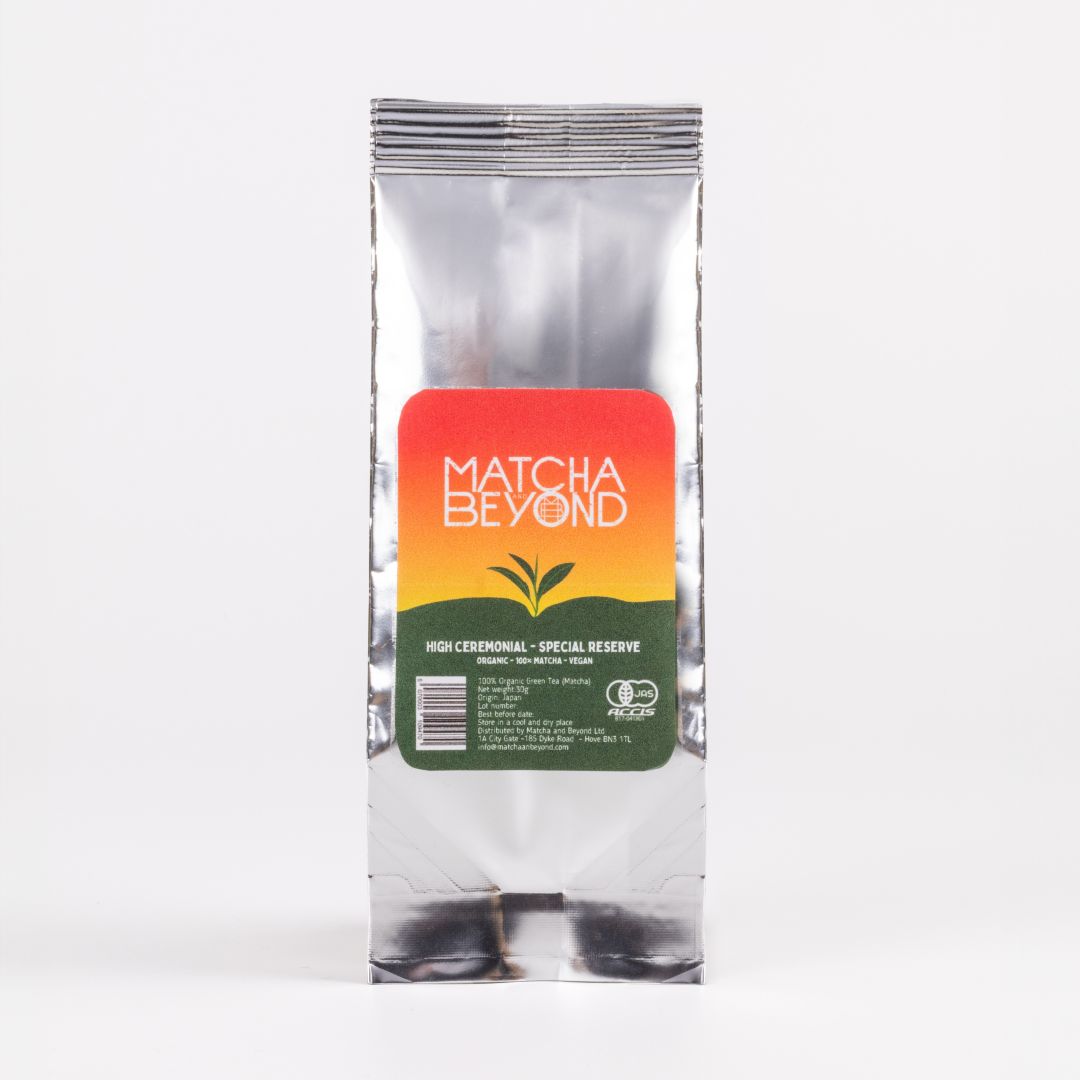
Matcha Special Reserve Refill
Sale price
£21.25
Regular price
£25.00
Skip to product information


Matcha and Beyond
Matcha Special Reserve Refill
30g | Up to 30 cups - £0.83 / per serving
Sale price
£21.25
Regular price
£25.00
Profile
Delicate umami, creamy with a soft finish.
Perfect For
Matcha expert with a fine palate.
Best Use
Drink pure with water - hot or iced.
Origins
Limited Edition – Japanese Agriculture – JAS and EU Certified Organic - Single Cultivar
Our new small batch Special reserve is 100% matcha green tea from an organic tea plantation in Kyushu Island within the Kagoshima Prefecture. This is our highest grade of matcha made from first flush tea leaves hand-picked in April, the tea leaves rest for a few months and are grinded in November. Our special Reserve Matcha has a vibrant green colour and the perfect umami flavour with some sweet notes which makes it the perfect matcha to be drink straight up.
100% Japanese matcha from a single source, the matcha is ground to order from first harvest tea leaves for maximum freshness.
30g bag – approx. 30 servings.
*ALL DAY ENERGY: 33mg caffeine per 1g, a healthy coffee alternative that provides calm, focused energy.
Ingredients
100% Japanese matcha from a single source, the matcha is ground to order from first harvest tea leaves for maximum freshness.
How to Use
Sift 1 to 2 measuring spoon (1 to 2 g according to strength preference) of matcha.
Add 60ml of water heated at 80c.
Using the bamboo Chasen whisk vigorously in a M pattern until you get the desired froth.
Add either 180ml of your preferred milk (hot or cold) or 80ml of hot water (under boiling point).
Sip and enjoy your prefect matcha.
Storage
We recommend to store your matcha in an airtight container in a cool, dark and dry place.
Keep your matcha away from direct sunlight. For optimum freshness, keep it in the aluminium tin. Avoid storing in a glass jar as light will impact Matcha’s taste and antioxidant content. Refrigerate once opened and consume within 2 months of opening for optimum freshness.
Shipping & Returns
Matcha and Beyond ships across the UK.
Standard delivery 48 hours*: £3.95 / Next day delivery*: £5.95
* Orders need to be placed before 1PM
Free Shipping: on all orders over £40. Discount automatically applied at checkout.
Orders shipped to Jersey and Guernsey may be subject to local import taxes, GST, customs clearance fees or other charges payable by the recipient
We currently do not offer international delivery on our website, however if you would like to be quoted for international delivery or require more information please contact us on info@matchaandbeyond.com.
Matcha: As a consumable food product, matcha is not eligible for return or exchange unless it is found to be defective.
Accessories and Gift Sets: Only unopened accessories and gift sets can benefit from the return or exchange policy.
Exchange: If, when you receive your product(s), you are not completely satisfied, you may return the items to us within seven days for an exchange or refund. Returns will take approximately 5 working days to process once the goods have arrived. Items must be unopened and in their original packaging, including all original boxes and packaging materials. If our labels are removed from the product, the warranty becomes void.
We strongly recommend that you fully insure the package you are returning. We suggest using a carrier that can provide you with proof of delivery. Matcha and Beyond Ltd will not be held responsible for items lost or damaged in transit. All shipping back to Matcha and Beyond Ltd is paid for by the customer. We are unable to refund postal fees.
Goods found to be tampered with by the customer will not be replaced but will be returned at the customer’s expense.
If you are returning items for an exchange, please be aware that a second postal charge will apply.

Certifications


How much caffeine does a cup of matcha contain?
Matcha contains roughly 45-70mg of caffeine per serving, making it an excellent slow released energy boost. Coffee will have up to 95mg per espresso shot, which will give you an instant energy boost with jitters and you will most likely crash after a couple of hours.
Does Matcha contain sugar?
No, pure matcha is sugar-free. Its natural sweetness comes from amino acids, mainly L-theanine. However, flavoured or sweetened versions may have added sugars, so always check the label. Matcha should be 100% matcha tea leaves.
What are the differences in the grades of matcha?
Ceremonial grade is grown to be drunk on its own. The plants are shaded for four to six weeks before a spring harvest, which keeps chlorophyll and amino acids high - vibrant green,
naturally sweet, and no need for milk or sugar. The flavour is delicate, so it is wasted in baking where stronger ingredients bury it.
Latte grade, also called premium grade, sits below ceremonial. Fuller bodied and less delicate, picked later in the year, and built to hold its colour and character through milk and added
flavours.
Culinary grade is grown to be mixed. Stronger and more astringent, a later harvest with more sun exposure, and a duller army green. Best for baking, smoothies and creative lattes carrying other strong flavours.
Grade is not the same as quality. Every grade has good and poor examples - quality comes from the region, the growing practices, how the leaf is picked and how it is ground.
How is Matcha Tea produced?
The traditional way of producing matcha is long and laborious, which can explain why matcha is more expensive than other teas.
The soil and climate are very important, the tea plant (camillia Sinensis) grows for 7 years to reach full maturity. 4 to 6 weeks before harvest the farmers cover the plants under shade to induce higher levels of chlorophyll and amino acid production. During the harvest, the younger leaves are picked steamed, dried, and sorted for quality, nutrition, and taste. The dried leaves are then deveined and slowly grinded with stone mills to preserves its nutritional values and create the fine matcha powder.
What is the best temperature to enjoy your Matcha?
Ideally, use water heated to 175°F (80°C) - not boiling This preserves matcha's antioxidants, delicate flavour and minimizes bitterness.
How can I make my Matcha frothy?
The traditional method involves a bamboo whisk (chasen) and vigorous, zigzag motions. Or, use a handheld frother for convenience (avoid the metal ones as speed and metal can alter matcha’s nutrient content). Have a look at ourmatcha guide.
What flavours complement well with Matcha?
Matcha pairs wonderfully with many fruits like mango, pineapple, lemon, berries or sweeteners like maple syrup, white and dark chocolate. They complement its earthy flavour while adding a touch of sweetness.
Matcha also pairs well with various milk options: almond, oat, vanilla flavoured or even coconut. Each will bring its unique flavour. Get inspired by our recipes!
Our Customers Love It
@matchaandbeyond


"Quick delivery and lovely tasting Matcha"
Loren Hall
"Great quality Product and aesthetically appealing"
Reine Gomis


You may also like
Invalid password
Enter